Showing posts with label black blue white gold dress. Show all posts

Thursday, January 5, 2023

Is That Dress White And Gold Or Blue And Black? The New York Times

black blue white gold dress

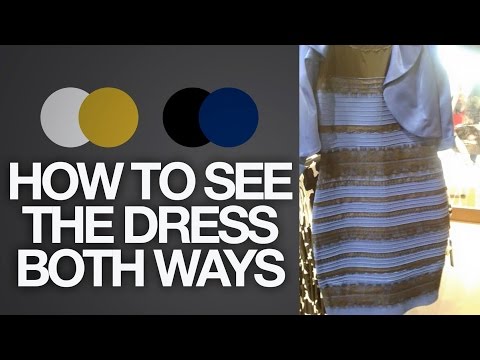
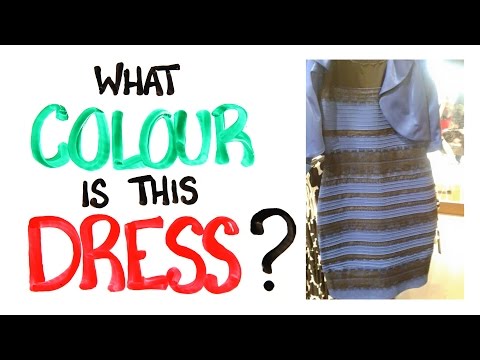
Even more interesting than the answer to what is the real color of the dress is why do some people see it as gold and white while others insist it’s blue and black. In the case of the blue dress, the brain is trying to subtract the colour bias caused by the light source. But some people’s brains are trying to get rid of the blueish tones - so they will see white and gold - and some are trying to get rid of the yellowy gold tones, which means they’ll see blue and black. After disagreements over the perceived colour of the dress in the photograph, the bride posted the image on Facebook, and her friends also disagreed over the colour; some saw it as white with gold lace, while others saw it as blue with black lace. For a week, the debate became well known in Colonsay, a small island community. This image is a fascinating example of something on the edge of a perceptual boundary.

black blue white gold dress

As the participants viewed the images, they could identify shades ranging from light blue to dark blue, with yellow/gold accents to dark brown/black accents. Several researchers discovered that the colors people reported are the same as those in the daylight. According to research, people are more likely to perceive a surface as white or gray if the amount of blue varies. Using a gold-tone inverted image, they striped lighter stripes blue while darker stripes were blue. Almost 98% of the participants saw those lighter stripes as vivid yellow today. Half the people on social media see this dress as blue and black and the other half see it as yellow and gold.

How are you shopping today?

It's called a scintillating grid illusion, made by superimposing white discs on the intersections of gray bars against a black background. Dark dots seem to appear and disappear rapidly at the intersections, although if you stare directly at a single intersection, the dark dot does not appear. If the photograph showed more of the room, or if skin tones were visible, there might have been more clues about the ambient light. Humans have a low concentration of rod receptors and a high concentration of cone receptors, which is why we can't see as well at night but can detect colors better, than say, cats. Marie Rogers is a PhD student with the Sussex Colour Group, investigating how colour word learning influences colour perception and cognition. She lives in lovely Brighton and her favourite colour is purple.

black blue white gold dress

To most of us, the change in the colour of light over the day would be less noticeable. For example, say you know your mug is white, but the light being reflected from the mug is slightly red. The brain can then discount a certain amount of red tint from the rest of the scene you are seeing.

Satin Pink Spot Empire Midi Dress

"If you see the dress as white and gold, you're probably seeing the photo as under-exposed, meaning there is too little light and the colors in the dress appear lighter to you after the retina has compensated." A BuzzFeed page devoted to the debate had more than 25 million views early Friday, with 72 percent of Internet users insisting the dress was white and gold, while 28 percent swore it was blue and black. A study carried out by Schlaffke et al. reported that individuals who saw the dress as white and gold showed increased activity in the frontal and parietal regions of the brain. These areas are thought to be critical in high cognition activities such as top-down modulation in visual perception. Similar theories have been expounded by the University of Liverpool's Paul Knox, who stated that what the brain interprets as colour may be affected by the device the photograph is viewed on, or the viewer's own expectations. Anya Hurlbert and collaborators also considered the problem from the perspective of colour perception.

A layer of tissue at the back of the eye, called a retina, contains cells called photoreceptors. Here at Slightly Blue, this gorgeous, calming color has all kinds of effects on us. We love the color blue for its ability to evoke all kinds of emotions in us. As we like to say, there is a shade of blue for any way you feel. "Everyone went to DEFCON 5 immediately when someone disagreed. It was like you were questioning something even more fundamental than their religion," Wired articles editor Adam Rogers said.

Sandy Brown Zebra Mini Smock Dress

Now, scientists also think that people’s familiarity with the amount of light in a given environment may guide their judgments about color. Hence, people who are more frequently exposed to daylight are more likely to make adjustments to their judgments about a wavelength by thinking about how daylight will interact with the wavelength. That is how some people reach a decision about the color they see and therefore perceive the dress as gold and white. In contrast, those who are more frequently exposed to artificial or incandescent light do not make these mental adjustments and perceive the color of the dress as it is – blue and black.

black blue white gold dress

Fig 2 shows the colorimetric set-up to quantify luminance and chromaticity. “There are owls like me who get up very late and stay up very late, who get less daylight exposure. "None of us have ever heard of this great an individual difference" in perception, Haller tells Yahoo Health.

Let’s take a look at what the dress actually looks like, in normal lighting with no special filters applied. You know what, let’s actually take things a step further and see what the dress looks like via a photo provided straight from the manufacturer, a company called Roman Originals. As we reported earlier in the day, the collective web over the last few days has been engaged in a bitter and incessant debate regarding the color scheme of… a dress. The philosopher John Locke identified this distinction long ago when he delineated between primary and secondary qualities. Primary qualities are qualities that objects have regardless of whether you're perceiving them. Secondary qualities are qualities that objects only have in virtue of how we perceive them.
black blue white gold dress

All related philosophical and epistemological debates aside, let’s get down to the science of how and why the general public can’t agree on the color of this fashionable dress. There is an entire subfield of psychology called sensation and perception, within which vision scientists vastly outnumber the researchers who devote their studies to the other senses. The fabric of a dress nearly caused the fabric of the Internet to unravel Thursday night, with people engaged in spirited debate over the color of the $80 item, reports CBS News correspondent Elaine Quijano. Take a look at the original, but stare at it for around 30 seconds. Start to really believe it’s blue and black, it will start to turn. After seeing those colors close up, my father said he kind of saw a blue tinge in the “white” section, and I realized I saw a golden tinge in the “black” section.


Why We'Re Fascinated By The Blue-Black, White-Gold Dress Big Think

black blue white gold dress

But even when it's the same photograph, some people see blue, and others see white. So we can recognize the same objects in different light conditions, our brains tweak the way we see things, he added. The dress was identified as a product of the retailer Roman Originals, which experienced a major surge in sales of the dress as a result of the incident. The retailer produced a one-off version of the dress in white and gold as part of a charity campaign. The photoreceptors convert light rays into nerve signals, which are then processed by nerve cells in the inner retina, sent to the brain, and translated as images.

black blue white gold dress

Lacking L or M cones has minimal impact on perceived dress colors while a lack of S cones yields a very different perception suggesting a primary role of the S cone input in perception of the Dress. The Dress as seen on the internet shown in A and the actual blue and black dress is shown in B. C shows an extracted image of the Dress consisting of vertical stripes of decreasing spatial frequency that was used in the present study to explore perception of the dress with limited contextual cues. Because your brain automatically converts blue-ish short-wavelength light into white and gold light, you would now assume that the dress was in the shadow of nature. As a result, the image became more yellow in hue, hence the dress’s classification as white and gold. The photo sparked confusion, anger and fascination, because despite the dress definitely being blue and black, to many, it appeared gold and white.

Fans Think Kate Middleton Just Honored Princess Diana In This Significant Red Coat

Find show stopping graduation dresses that suit your personality. Add some flair to your weekday outfits with our work dresses. Whether it is an interview or a business meeting, a smart formal dress always makes a lasting impression. Browse through our lovely collection of dresses at Target to find your pick. When looking at a photo of it, some people see it as gold and white, while others see it as blue and black. There's a scientific explanation for why #TheDress looks black and blue to some people and white and gold to the others.

black blue white gold dress

However, the dress surely reflected the same amount of light for everyone, so it was clear that the difference arose later, once an individual’s brain began processing the wavelengths. Some perceived it as blue-black, while others saw it as gold and white, and a small margin of people even saw it as brown and blue. According to the most recent internet sources, it now appears the dress really is blue and black. The mystery may be solved, but the fascination with how we all see the dress differently continues. "If you put a color meter up to the 'white' portion of the dress, you'll see in the red, green and blue readings that there's a bit more blue than red or green; in that sense the dress is blue. But it could have been white under blue illumination." For example, if you stare at a gray object and make the gray increasingly yellow or blue, then you’re more likely to see the object as yellow than as blue.

Is #TheDress white and gold or blue and black? Rice expert on visual perception weighs in

In the days after “The Dress” was posted online, a group led by psychologist Karl Gegenfurtner at Giessen University in Germany asked 15 people to view the photograph on a well-calibrated color screen under controlled lighting. The participants then had to adjust the color of a disc to correspond to the colors they saw in the photograph. For the lighter stripe, participants reported seeing a continuous range of shades from light blue to dark blue, rather than white and blue, the two dominant colors reported so far. The human brain assumes that natural or artificial light is reflected by the item in the photograph and compensates for that perception by assuming the surroundings are also natural or artificial.

The second part of seeing, Haller says, is that “information from the retina is sent via the optic nerve to the brain.” In the brain, contextual processing occurs — this is why colors may look different at different times of the day. “There are differences in ambient light and interpretation, and the brain will weed out things like reflectants and changing bits of data,” she says. "For some reason, this particular photo and the lighting is throwing off that normal process, and magnifying the difference." I'm not a relativist; I'm not saying there is no way the world is. There are definite facts about the world and they are discoverable. The only thing that is blue and black or white and gold is people's experiences.

The Black and Blue, White and Gold Dress

The researchers further found that if the dress was shown in artificial yellow-coloured lighting almost all respondents saw the dress as black and blue, while they saw it as white and gold if the simulated lighting had a blue bias. The truth is the colors of the dress in the photograph are a murky brown and a greyish lavender. Whether you see the dress as blue and black or gold and white depends on how your brain is interpreting the scene.

black blue white gold dress

But experiencing it and seeing the white and gold as well, was eye opening. If you see white and gold your eyes don’t work very well in dim light so the retina rods see white making them less light sensitive which causes “addictive mixing” of green and red which make gold. "What's correct is that the dress itself, which is for sale online, is actually blue," he said. "That means that the lighting under which the photograph was taken must have been a fairly good white – that is, an even mixture of all wavelengths or colors—and thus a flat spectrum." At this point it appears to be just how your eyes adjust to the mix of colors. If your eyes are more sensitive to blue and black, that's what you see; if they are more sensitive to the lighter colors, that is what you see.

Kendall Jenner Promotes Her Tequila Brand While Wearing An Insane Cutout Dress On Instagram

Other contextual knowledge may come into play, for example you are drinking coffee by the window at dawn. It makes sense for the light to be red-tinted as the illumination source is the sunrise. All of our perceptual experiences are informed by this kind of processing, resulting from context and previous knowledge. The dress illusion presented a rare opportunity, as the illusion was related to color. Color is the wavelength or frequency at which light is reflected off a surface.

black blue white gold dress

The brain works to subtract out the extra yellow, in other words to compensate for the colors present in the light rays of the illuminant in order to yield our ultimate perception. Our visual system discounts the information about the light source so that we process the colors of the actual object being viewed. “It caught fire because it was a case in which color wasn’t doing what we expect,” says Conway, who teaches at Wellesley College and the Massachusetts Institute of Technology.